
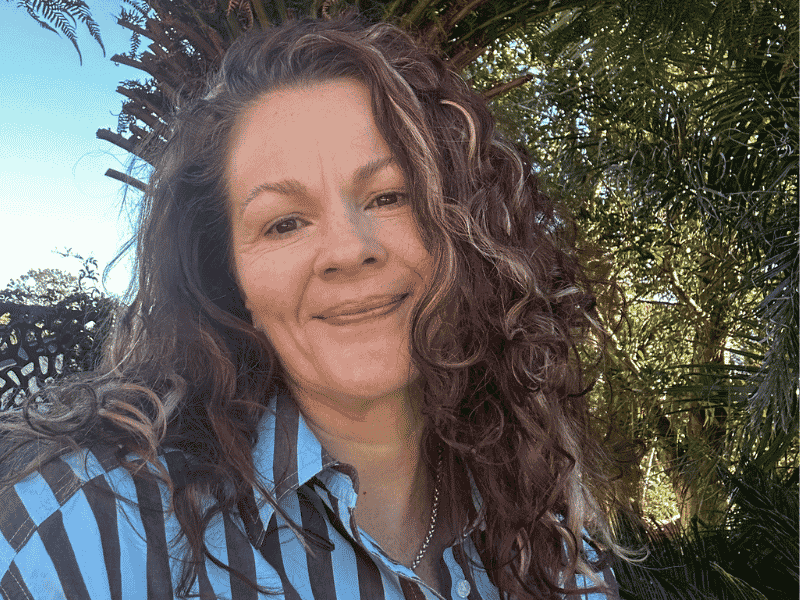
She Was Dismissed for 24 Years. Then They Found Endometriosis Everywhere
When Pru first went to the doctor, to ask for help, she was 14.
She was in pain. Severe, relentless pain. The kind that stops you from functioning, that leaves you exhausted, frightened, and searching for answers.
The response?
“It’s just a bad period.”
She was given the pill and sent on her way.
What followed wasn’t just a delay in diagnosis.
It was 24 years of being dismissed, misdiagnosed, and unheard.
This is not a rare story. It is all too common. It is systems failure.
Pru saw doctor after doctor, year after year, presenting with the same symptoms.
Heavy bleeding. Chronic fatigue. Severe pelvic pain. Clear signs that something wasn’t right.
And yet she was told she was overreacting, labelled attention-seeking, dismissed as “one of the lucky girls”, and even accused of seeking “male attention”.
Not once, in over two decades, was endometriosis meaningfully investigated. Not once.
Not once was the word endometriosis mentioned.
The year Pru turned 40, she reached breaking point, thinking: “I can’t live like this anymore”, she pushed for a hysterectomy as a last resort after decades without answers.
“I was literally the living dead. I had no life, and yet I was alive, trying to function.”
When doctors finally operated, they found endometriosis throughout her body.
“Everywhere,” Pru tells us. “They had to scrape it off most of my organs. My left ovary had fused to my bowel. Leading to more surgery, a cancer scare, and medically induced menopause.”
After decades of being told nothing was wrong.
By the time Pru was finally diagnosed, at 41, her endometriosis had progressed to advanced disease. But the real cost cannot be measured by clinical staging alone.
Endometriosis didn’t just impact Pru’s health. It reshaped the course of her life.
She was accepted into a double degree: Education and International Studies, with plans to study in Florence.
She never made it there.
“I wanted so badly to be a teacher” Pru shares with us.
But living with endometriosis meant that Pru had to drop out of university, twice.
And what followed was not a career path, but a cycle of instability. Moving between jobs, missing opportunities for progression, being labelled unreliable due to her health.
“I have no career. Endo took that from me.”
Endometriosis is more than a chronic health issue, it is a disease that limits workforce participation and financial independence. It is a financial burden that never ends.
In trying to find answers, Pru spent decades navigating a fragmented system. Moving between GPs, specialists, and allied health providers, paying for tests, medications, and treatments, and managing pain simply to function day to day. “We are looking at well over $200,000” Pru tells us.
And today, the financial impact hasn’t stopped for Pru, it has simply changed form.
“I have no savings. No super. Everything I earn goes into managing my health.”
“Per month I spend on average $500, sometimes more, on treatments and medications for pain, fatigue and ongoing gut issues.”
What is often missing from the conversation is the ongoing cost of living with endometriosis, long after diagnosis.
And then there is the invisible toll: the cost of being dismissed.
For Pru, perhaps the deepest impact came from years of not being believed.
“I believed I was totally, completely and wholly unworthy… invisible and worthless.”
Repeated dismissal chipped away at her sense of self. She was labelled “lazy” and “unreliable”, she was told her health was nothing but an “excuse”.
Pru reflects, “24 plus years of that… you start to believe it.”
This is the hidden impact of endometriosis when systems fail:
Not just chronic pain, but chronic invalidation.
Looking back, Pru doesn’t hesitate when asked what went wrong.
“Ignorance, arrogance, lack of knowledge… outdated training and beliefs and outdated, antiquated attitudes towards women’s bodies and women’s health.”
Year after year, she presented with the same symptoms of debilitating pelvic pain, heavy bleeding and clotting, chronic fatigue, and deteriorating health
And yet, she was dismissed, minimised, and redirected. Time and time again.
This is what system failure looks like. Not just missed diagnosis, but a pattern of dismissal embedded across care, training, and clinical culture.
And it’s still happening.
Pru hoped her daughters would grow up in a different reality.
That awareness would translate into better care.
But recently, she found herself watching her 14 year old daughter in the middle of the night, writhing in pain on the bathroom floor.
“For a second, I wasn’t sure if I was watching myself or my daughter.
It was both.”
They sought help through a specialised clinic.
The response?
“It’s just a bad period”
Pru was horrified. “I thought: what is this? Are we back in 1989?”
Thirty years later, the same dismissal.
Despite growing awareness, the systems shaping diagnosis, care, and support have not kept pace.
This is why awareness is not enough
There is no question that awareness of endometriosis in Australia has grown.
More people recognise the condition. More stories are being shared.
But Pru’s experience, across two generations, highlights a critical truth:
Awareness alone does not change outcomes.
That is why we are here. For Endometriosis Australia, awareness was never the end goal, long-term systemic change is.
Without investment in structural reform:
- People living with Endometriosis will continue to be dismissed
- Diagnosis will continue to take years
- Healthcare gaps will persist
- Workplace and economic impacts will grow
- Families will continue to carry the burden for generations to come
This is the turning point
We are now at a critical moment.
The awareness has been built. The evidence is clear. The voices are impossible to ignore.
What’s needed now is system-wide reform.
That means:
- Training and equipping frontline health professionals to recognise and respond earlier
- Expanding workplace reform so people aren’t forced out of jobs or careers
- Driving national policy and funding change to improve access and equity
- Scaling proven programs that are already delivering impact
How you can help
This is the moment to turn awareness into action.
Because stories like Pru’s should not still be happening, not to her, not to her daughters, not to anyone.
At Endometriosis Australia, we need your help drive the system change people with endometriosis urgently need.
 5
5
 0
0